Key Takeaways
- NOAA is forecasting a better-than-79% chance that El Niño remains strong to very strong through January-March 2027, the heart of Marino Ballena's northern-hemisphere humpback whale season.
- Tour operators in Golfo Dulce reported noticeably thinner whale sightings during the August-October 2026 southern-hemisphere season, with some mornings where only 1 of 30-40 boats found a whale.
- Published research (McGill University, 2009-2016) shows humpbacks tend to depart earlier in El Niño years, driven by warmer sea surface temperatures, lower chlorophyll, and reduced food availability.
- For Uvita vacation rental owners, the practical read is that the December-March 2026-2027 whale-watching window may see softer bookings. Base rental demand (beaches, Marino Ballena park access, remote work, nature tourism) is diverse enough that total occupancy impact is likely modest.
- For buyers considering Uvita property, El Niño should not change the fundamental decision. Whale tourism is resilient over multi-year cycles, and El Niño years are typically followed by strong rebounds. If anything, this news creates a small buying window with sellers who overestimate the impact.
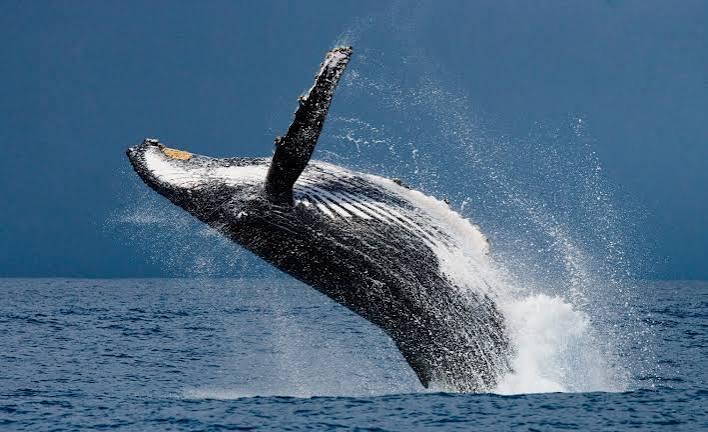
Costa Rica's humpback whales are a measurable part of what makes Uvita and the Marino Ballena corridor work economically. Whale season drives vacation rental bookings, restaurant traffic, tour operator revenue, and a large share of the international visitor flow that underpins property demand in this stretch of the Southern Pacific. So when news breaks that the 2026-2027 whale season may be thinner than usual, property owners and buyers have a legitimate reason to pay attention.
On November 19, 2026, the Tico Times reported that a strong El Niño event is likely to reduce humpback numbers off Costa Rica this season, with the US National Oceanic and Atmospheric Administration giving a better-than-79% chance that El Niño will remain strong to very strong through January-March 2027. That window is the heart of Marino Ballena's northern-hemisphere whale season, which typically runs December through March.
This is a Cavu-side read on what that actually means for people who own, rent out, or are thinking about buying Uvita property.
What El Niño Actually Does to Whale Behavior
Humpback migration is driven by two things: breeding grounds and food. Marino Ballena is one of only a handful of places in the world with two annual humpback seasons because it sits at the convergence point where northern-hemisphere whales (December-March) and southern-hemisphere whales (August-October) both come to calve and breed in protected tropical waters.
El Niño disrupts the food side of that equation. Warmer sea surface temperatures reduce ocean mixing, which lowers chlorophyll concentrations, which thins out krill and small fish populations, which means less food in the places humpbacks normally forage. A 2009-2016 satellite tracking study out of McGill University found that whales tend to depart their feeding grounds earlier in El Niño years, driven by that same cascade. In Costa Rica specifically, the researchers documented warmer water correlating with lower chlorophyll and earlier whale departures.
Separately, a University of Hawaii study of the 2014-2016 marine heat wave found that food-stressed humpbacks reduced their activity to conserve energy. That helps the animals survive but, notably, it did not sustain early-stage pregnancies. That matters because fewer calves born in a strong El Niño year means potentially fewer mother-calf pairs visible in Costa Rica waters the following season, which is exactly the visual experience that defines the Marino Ballena whale-watching product.
What Guides Are Already Seeing
This is not just a forecast. Costa Rica guides have already been reporting thinner sightings.
Priscilla Tours in Golfo Dulce (south of the Osa Peninsula, a comparable but different habitat to Marino Ballena) said that during the August-October 2026 southern-hemisphere season, there were mornings when only 1 of roughly 30-40 boats on the water found a whale. A captain with 12+ years of experience reported that whales are now spending longer periods farther out rather than staying inside the protected waters of the gulf, which he attributed to warming sea temperatures. The same report noted partial or total coral bleaching in the area, another thermal-stress signal.
Marino Ballena is a different ecosystem than Golfo Dulce, but the underlying pattern, warmer water pushing whales to different depths and locations, applies across both. If the southern season was already thinner, there is real reason to expect the northern season (December 2026 through March 2027) to be similar.
What This Means for Uvita Vacation Rental Owners
This is where the real-world property implications start.
Whale season drives measurable demand in Uvita vacation rentals, particularly during the northern-hemisphere peak (December-March) when it overlaps with the dry-season window that already brings North American and European visitors. Peak-season occupancy at well-positioned Uvita properties often runs 80-95% during that window, and the implied revenue is a meaningful portion of annual rental income.
If the 2026-2027 whale season is thinner than usual, the realistic scenario for the typical Uvita vacation rental is a modest softening, in the range of 5-15% fewer whale-watching-driven bookings during the December-March window. That is enough to notice, but it is nowhere near catastrophic, and here is why.
**Uvita's rental demand is not a one-trick pony.** The reasons people rent in Uvita extend well beyond whale watching:
- Marino Ballena National Park offers one of the only easy-access protected marine areas on the Pacific coast, with the famous Whale's Tail sandbar, swimmable beaches, and family-friendly tidepools that function year-round regardless of whale presence.
- The broader Costa Ballena corridor (Dominical, Uvita, Ojochal) draws surf travelers, yoga retreats, remote workers, honeymooners, and nature photographers, none of whose booking decisions depend on whale forecasts.
- Dry-season weather (December-April) is itself the primary demand driver for most North American visitors. Whales are a feature, not the headline.
- International whale-watching travel is often planned 6-18 months in advance, meaning many 2026-2027 bookings were already locked in before the El Niño signal became clear.
The honest read for Uvita vacation rental owners is that the whale season news is a reason to pay attention to pricing and marketing, not a reason to panic. If your property's listing leans heavily on whale-watching proximity in the booking copy, consider broadening the pitch for the 2026-2027 window to lead with the national park, the beaches, the national-park-managed sandbar experience, and the full Southern Zone lifestyle. The whales will show up. They may just show up in smaller numbers or later than usual.
What This Means for Property Buyers
If you are thinking about buying a Uvita property, El Niño should not change your fundamental decision.
Humpback migration is cyclical, resilient, and well-studied. El Niño years are typically followed by rebound seasons as the ENSO cycle shifts back to neutral or La Niña conditions. The last major El Niño of comparable strength was 2015-2016, and whale numbers off the Costa Rican Pacific recovered within two to three seasons. There is no credible scientific projection that humpbacks will stop visiting Marino Ballena, only that individual seasons will fluctuate.
From a pricing and negotiation standpoint, if anything, news like this creates small opportunities for disciplined buyers. Some sellers who track media closely may overestimate the impact on long-term vacation rental economics and become slightly more negotiable. A buyer who understands that the underlying Uvita demand drivers (national park, beaches, climate, international community) are structural and not whale-dependent is in a better position to buy well during years when the headlines look soft.
The Longer View
The humpback tourism economy in the Costa Ballena corridor is roughly two decades old in its current commercial form. It has weathered previous strong El Niños, the 2008 global recession, the 2020 pandemic, and a steady drift upward in sea surface temperatures. In each of those episodes, bookings dipped, operators adapted, and the longer trend continued upward. The pattern is consistent: short-term volatility, long-term resilience.
The property market in Uvita has mirrored that trajectory. Values have appreciated meaningfully over the last decade, driven by the combination of Marino Ballena's protected status, improving infrastructure, growing international awareness, and the fundamental scarcity of coastal land with legal access and water inside a national-park-adjacent zone. None of that structural story changes because of one El Niño year.
If you own a Uvita vacation rental, the 2026-2027 window may be softer than average and worth planning around in pricing and marketing. If you are considering buying, this is a normal fluctuation, not a signal to pause. And if you are watching the Southern Zone market generally, the Cavu team lives here year-round and we are happy to walk through what we are actually seeing in Uvita inventory, pricing, and booking data for anyone thinking seriously about buying.
Current Uvita inventory, from walkable-to-beach bungalows to ridge-top ocean-view homes, is live in our Uvita listings. For a broader read on the market overall, our Uvita real estate guide covers pricing, neighborhoods, and buyer strategy in more depth.
References
- https://ticotimes.net/2026/11/19/costa-rica-humpback-whale-season-el-nino https://www.cpc.ncep.noaa.gov/products/analysis_monitoring/enso_advisory/ensodisc.shtml https://ticotimes.net/2026/06/13/costa-ricas-humpback-whale-season-begins-on-the-pacific-coast
Source: Original article
Explore local real estate markets:
Dominical real estate · Uvita real estate · Ojochal real estate · Southern Costa Rica real estate
Explore properties in the Southern Zone:
Frequently asked questions
Marino Ballena National Park is one of only a handful of places in the world with two annual humpback whale seasons. The southern-hemisphere season runs roughly August through October, and the northern-hemisphere season runs roughly December through March. The December-March window typically overlaps with the dry-season tourism peak, which is why it has an outsized effect on Uvita vacation rental demand.
The honest answer is probably yes, modestly. NOAA is forecasting a better-than-79% chance of a strong to very strong El Niño through January-March 2027, and Costa Rica guides were already reporting thinner sightings during the August-October 2026 southern season. Published research (McGill 2009-2016) shows humpbacks depart feeding grounds earlier in El Niño years driven by warmer water and reduced food. It is unlikely whales disappear entirely from Marino Ballena, but 2026-2027 will probably be a thinner-than-average season.
The realistic estimate for Uvita vacation rentals during the December-March 2026-2027 window is 5-15% fewer whale-watching-driven bookings. That is noticeable but not catastrophic, because Uvita rental demand is driven by multiple factors beyond whale watching, including Marino Ballena National Park access, Whale's Tail sandbar, dry-season weather, and broader Southern Zone tourism. Owners who previously marketed primarily around whale watching should consider broadening the pitch for this season.
No. The fundamental case for Uvita property, Marino Ballena National Park proximity, improving infrastructure, growing international community, and genuinely scarce coastal land with legal access and water, is structural and does not depend on one whale season. Humpback tourism has recovered strongly from previous El Niño years. If anything, news cycles like this can create small opportunities to negotiate with sellers who overestimate the long-term impact.
The 2015-2016 El Niño was comparable in strength to the current forecast, and it did reduce humpback sightings along the Costa Rican Pacific during those seasons. Whale numbers recovered within 2-3 seasons as the ENSO cycle shifted. The pattern suggests short-term volatility in individual whale seasons followed by longer-term resilience, which is the realistic framing for 2026-2027 as well.