
 Hotel
Hotel$7,000,000
Front Row Titled Oceanfront Hotel, Restaurant and Spa in Drake Bay
View full listing →
Cavu Costa Rica Real Estate serves buyers exploring the Osa Peninsula, helping clients understand the realities of this remote market before committing to purchase.
Region
Southern Pacific, Puntarenas (Osa Peninsula)
Anchor landmark
Corcovado National Park
Market profile
Remote, nature-first, low-density property market
Buyer fit
Eco investors, conservation-minded owners, long-horizon buyers
Cavu Costa Rica Real Estate serves buyers exploring the Osa Peninsula, helping clients understand the realities of this remote market before committing to purchase.
Osa Peninsula Costa Rica real estate is fundamentally different from mainstream coastal markets. Located in Costa Rica's southern Pacific region, the peninsula is known for extreme biodiversity, large protected areas, and low-density development patterns shaped by terrain and conservation priorities. Corcovado National Park strongly influences the region's identity, tourism profile, and long-term property demand.
Buyers searching homes for sale on the Osa Peninsula are usually not looking for conventional resort living. They are typically seeking privacy, conservation-oriented ownership, eco-lodge potential, or land-based projects with long planning horizons. Inventory often includes remote homes, estate-scale parcels, and land opportunities that require careful feasibility work before development.
Compared with Dominical, Uvita, Ojochal, and San Isidro, Osa is more logistically complex. Access can involve longer road segments, seasonal variability, and higher infrastructure planning requirements. That is not a drawback for every buyer — it is exactly why the market appeals to people who value nature-first living and lower density.
Land for sale on the Osa Peninsula can offer exceptional long-term potential, but success depends on disciplined due diligence: access rights, water solutions, power and internet feasibility, slope and drainage behavior, and realistic construction timelines.
What different budgets buy in Osa Peninsula — 2026 market conditions.
| Property Type | Price Range | What to Know |
|---|---|---|
| Remote eco-property | $200K–$800K+ | Wide range based on size, access quality, and infrastructure. More remote = more complex operations. [NICK: verify] |
| Near-town home (Puerto Jiménez area) | $150K–$400K | More accessible properties with easier logistics — still require full diligence on utilities and access. [NICK: verify] |
| Eco-lodge / hospitality parcel | $300K–$1.5M+ | Operating or development-ready lodge properties — values tied closely to permit status and income potential. [NICK: verify] |
| Jungle lot | $50K–$300K | Raw land — access, water, and feasibility for development are the defining variables. [NICK: verify] |
| Larger conservation parcel | $100K–$500K | Multi-acre holdings for long-term conservation or land banking — legal clarity and access are critical. [NICK: verify] |
Ranges reflect 2026 market conditions and vary by specific location, condition, view quality, and infrastructure. Verify current comps with a local specialist before making any decisions.
Main town on the peninsula — closest to services, healthcare basics, and regular supply routes. Gateway for most Osa property purchases.
Remote south of the peninsula bordering Corcovado National Park — extreme privacy, very limited infrastructure, suited for conservation or off-grid buyers.
Northern peninsula — historically accessed by boat or small plane. Known for eco-lodge operations and dramatic coastal wilderness settings.
Gateway community at the mouth of the Sierpe River — entry point to the northern Osa and Drake Bay area; more accessible than deep peninsula locations.
Homes for sale on the Osa Peninsula Costa Rica are typically defined by environment and logistics rather than urban-style neighborhood patterns. Buyers will find remote homes, jungle estates, and low-density properties designed around nature access and privacy. The value driver is not walkability or commercial proximity, but operational feasibility in a remote tropical setting.
Common use-cases include private owner occupancy, eco-retreat concepts, and seasonal adventure-lifestyle ownership. Buyers should prioritize structural suitability for high-rain environments, drainage, access reliability, and utility resilience.
Explore Osa listings
Explore listingsLand for sale on the Osa Peninsula is one of the strongest reasons buyers enter this market. Parcels may support eco homes, private conservation estates, boutique hospitality, or long-hold land strategies. Development assumptions must be conservative and highly site-specific.
Critical diligence points include legal access, water source and permitting context, topography, erosion and drainage behavior, and realistic construction logistics in wet season. Some projects rely on hybrid or off-grid utility systems. For the right buyer, this complexity reduces casual speculative activity and keeps the market quality-selective.
Review land opportunities
Explore listingsWithin Southern Zone Costa Rica real estate, Osa is one of the most specialized submarkets. Dominical and Uvita generally offer easier access, broader services, and higher transaction volume. Osa offers a different value proposition: rarity, ecosystem quality, and lower-density long-horizon ownership.
Demand is strongest among eco-minded international buyers, conservation-oriented investors, and operators building nature-led hospitality models. This is not typically a short-cycle market. Osa Peninsula property performs best when buyers match strategy to local realities: remote operations, environmental constraints, and thoughtful infrastructure planning.
See broader Southern Zone context
Explore Southern Zone Costa Rica real estateCorcovado is widely considered one of the most biodiverse places on earth, covering a significant portion of the Osa Peninsula. Access is controlled — permits are required for certain areas and guided entry applies to core zones. For buyers, proximity to Corcovado is a major appeal but also shapes what development is possible near the park boundaries. Conservation-minded buyers often view this constraint as a feature, not a drawback.
[NICK: describe what daily life is actually like on the Osa — how remote is it really, what infrastructure exists in Puerto Jiménez (internet, grocery options, medical basics), how do residents get supplies from the mainland, what is medical care access like, how does internet connectivity hold up?]
[NICK: describe the type of buyer who actually thrives living on or owning property on the Osa Peninsula — conservation-minded individuals, eco-tourism operators, people seeking a genuinely off-grid or low-infrastructure lifestyle. What should buyers know about the reality of remote ownership here — what are the trade-offs that people discover after buying?]
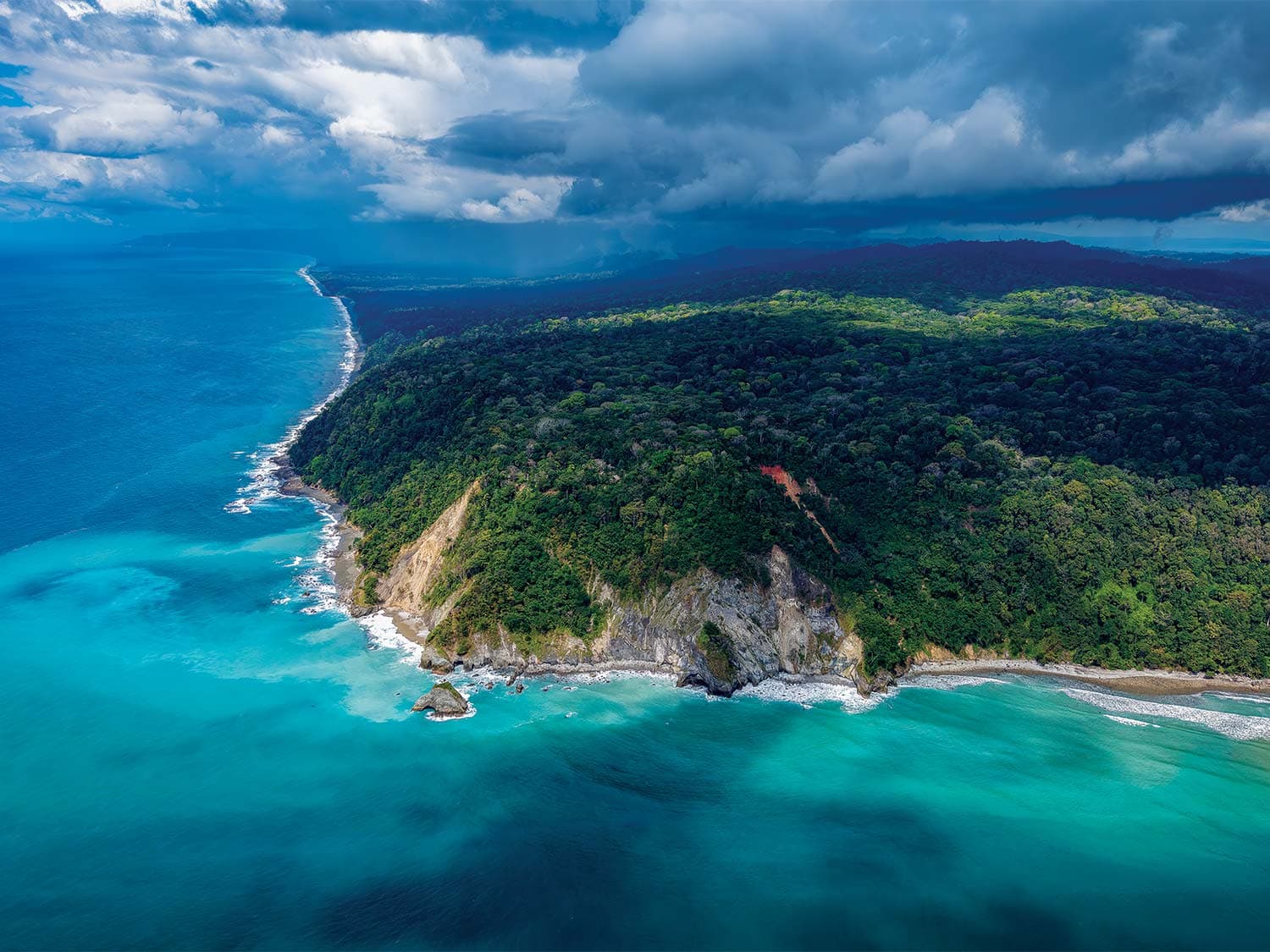
The Osa Peninsula is in Costa Rica's far southern Pacific region, known for remote rainforest landscapes and Corcovado National Park.
The Osa Peninsula is on Costa Rica's southern Pacific coast in Puntarenas province. It is one of the country's most biodiversity-rich regions and is best known internationally for Corcovado National Park. In real estate terms, it sits farther south and is generally more remote than the Dominical–Uvita corridor. Buyers should think of Osa as a nature-led market where logistics and terrain are central to acquisition strategy, not an afterthought.
It can be, but only for buyers whose lifestyle expectations match remote realities. Full-time living on the Osa works best for people prioritizing nature, privacy, and lower-density living over urban convenience. Service access, healthcare planning, and rainy-season logistics should be mapped carefully before purchase. Many successful full-time owners plan routines around regional hubs and maintain strong local operational support.
Common inventory includes large land parcels, remote homes, eco-retreat properties, and low-density estates. Homes for sale on the Osa Peninsula are often tied to nature and terrain rather than conventional neighborhood patterns. Land remains a major segment because many buyers prefer custom development aligned with conservation and climate considerations.
Osa has a tropical, high-rainfall climate with strong wet and dry seasonal variation. Rain management, drainage engineering, and access planning are essential for both homes and land projects. Climate should be treated as a design and operational factor from day one. Properties built for tropical durability generally perform better over long hold periods.
Yes, foreigners can generally buy titled property in Costa Rica, including on the Osa. The key is strong legal and technical due diligence: title verification, easements, access rights, water feasibility, and infrastructure planning. In remote regions, legal clarity and operational practicality are equally important for long-term value protection.
Infrastructure varies widely across the Osa. Some locations near Puerto Jiménez have workable connectivity and services, while others require more independent solutions. Buyers should verify internet performance, power reliability, water legality, and road condition at the exact property — not assume uniform service across the peninsula.
At minimum: legal title review, cadastral and survey verification, easement and access confirmation, water and utility feasibility, topographic analysis, and drainage and access planning for rainy season. For development-focused land, add engineering and permit pathway review early. This process is critical in remote, terrain-sensitive markets where skipping steps creates expensive problems.
Osa is generally more remote and nature-intensive than any of those markets. Dominical, Uvita, and Ojochal offer easier tourism and service access; San Isidro offers stronger inland infrastructure. Osa appeals to buyers willing to trade convenience for ecosystem quality, privacy, and conservation-led ownership potential. It is a fundamentally different buyer profile.